Flipkart seller guide
RTO vs Customer Return on Flipkart: Charges and How to Tell Them Apart
Quick answerFlipkart's own report help defines RTO as a courier return, an order cancelled after dispatch, and RVP as a customer return created after delivery. The returns report writes them as courier_return and customer_return, and the settlement report as Logistics Return and Customer Return. In our settlements an RTO cost no fee, as the sale and refund cancelled out, while a customer return also cost the reverse shipping fee plus 18% GST. Their reasons differ too, so track them separately.
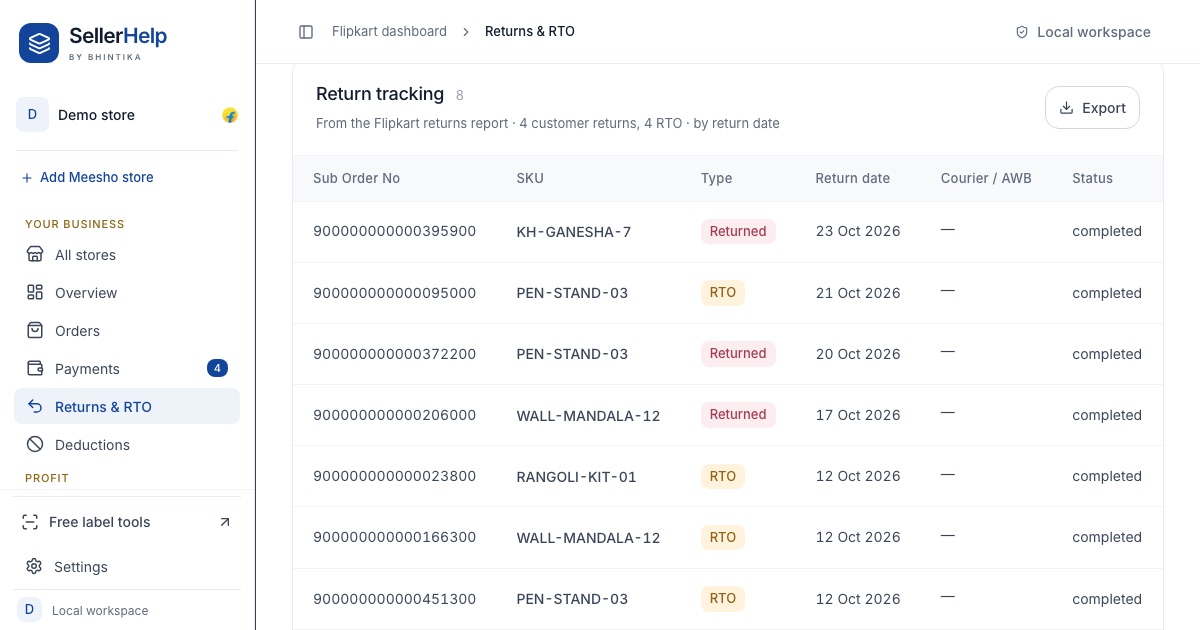
On this page · 6 sections
The two kinds of return in Flipkart's words
The definitions are from the Help sheet inside the Flipkart returns report.
| RTO | Customer return (RVP) | |
|---|---|---|
| Flipkart's definition | Courier return: order cancelled after dispatch | Customer creates a return after delivery |
| Returns report, return_type | courier_return | customer_return |
| Settlement report, Return Type | Logistics Return | Customer Return |
| Reached the customer? | No | Yes |
What each one cost us
In one month of our settlement report, 117 RTO rows had a refund that cancelled the sale and no reverse shipping fee. The 53 customer returns each carried a Reverse Shipping Fee of ₹110 to ₹230 plus 18% GST, most often ₹139 or ₹175. That fee is the main cost of a customer return; see the reverse shipping fee guide for the full table.
An RTO still costs you the packing, the label and the time the stock is away. Check your own file, because terms can change.
Why they happen: reasons from our returns report
The two lists hardly overlap. RTO reasons are about delivery attempts and cancellations after dispatch. Customer return reasons are about the product: quality, a wrong or damaged item, or a change of mind. So the fixes are different too. The returns report covers a different date range than one settlement, so its counts will not match the settlement exactly.
| Courier returns (RTO) | Count | Customer returns | Count |
|---|---|---|---|
| ORC_validated with customer | 29 | QUALITY_NOT_AS_EXPECTED | 19 |
| Attempts_Exhausted | 16 | DIFFERENT_PRODUCT_RECEIVED | 10 |
| Uncontrollable Factors | 8 | DAMAGED_PRODUCT_RECEIVED | 7 |
| Cancelled OTP validated | 5 | CUSTOMER_DOES_NOT_WANT | 6 |
| Others | 24 | Others | 9 |
Measure them on the right base
- RTO rate: RTO orders ÷ dispatched orders. An RTO never reached the customer.
- Customer return rate: customer returns ÷ delivered orders, the orders that reached the customer.
- Use the same dates for both counts, and wait until recent orders are delivered or returned before calling a rate final.
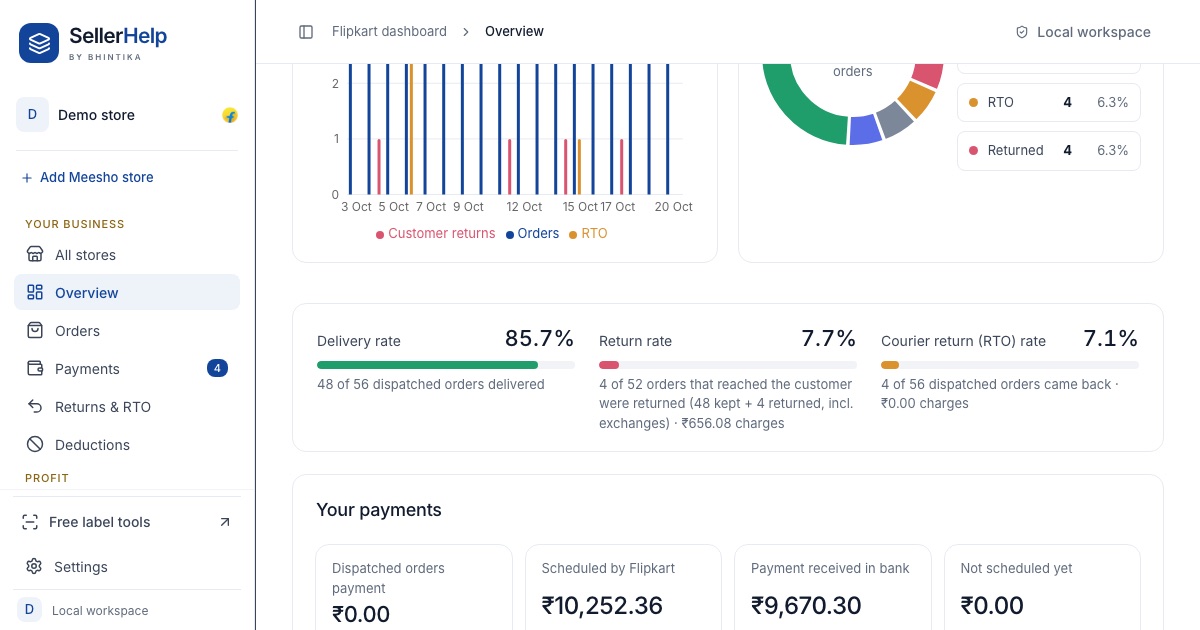
Track both without sorting files by hand
The free Flipkart seller dashboard reads the returns report and the settlement report, marks each order as RTO or customer return, and shows both rates and the charges for each on the Returns & RTO tab.
Frequently asked questions
What is RTO in Flipkart?
RTO is a courier return: the order was cancelled after dispatch and the parcel went back to the seller without reaching the customer. The settlement report calls it Logistics Return.
What is RVP in Flipkart?
RVP is a customer return: the customer received the item and created a return. The settlement report calls it Customer Return.
Does Flipkart charge the seller for RTO?
In our month none of the 117 RTO rows had a reverse shipping fee; the sale and refund cancelled out. Customer returns did have the fee. Check your own report, as terms can change.
Which is worse for a seller?
A customer return costs more in fees, and the item may come back used or damaged. An RTO usually comes back unopened but still costs packing and time.