On this page · 9 sections
How do you decorate a pooja room with steel decor?
Keep the pooja room simple: a clean platform for the idols, a steel thali and diya for daily use, one wall piece beside the mandir, warm light and fresh flowers. Steel is easy to wash and does not tarnish the way brass and copper do, so it suits a space that is used every day.
You do not need a separate room for this. The same pooja room decoration ideas work for a wall shelf in a one-bedroom flat. The Vastu points below are traditions that many families follow, not fixed rules.
Where should the pooja room be in the home?
Vastu tradition suggests the north-east corner of the home for the pooja room, with the person facing east or north while praying. Many families follow this where the floor plan allows.
In a flat, the choice is often limited. A clean, quiet corner of the living room or dining area is a common and practical answer. By tradition, families avoid a wall shared with a toilet, the space under a staircase and, where possible, the bedroom.
What are the best pooja room decoration ideas?
The best ideas are the ones that keep the space clean, bright and easy to use every morning. Here are ten that work in small and large homes:
- Start with a light backdrop. White, cream or light yellow behind the mandir makes the idols and the lamp stand out.
- Use one steel pooja thali as the base for daily items such as the diya, kumkum, rice and flowers. It keeps the platform tidy.
- Keep a steel diya or lamp with a wide, stable base. It is easy to wash when oil and soot collect.
- Add a kalash or lota. On festival days, place mango leaves and a coconut on it.
- Keep a bell and an incense holder on one side, always in the same place.
- Hang one wall piece, such as an Om, Krishna or Ganesha design, on the side wall. One piece is enough for a small space.
- Put a toran or bandhanwar on the door or frame of the pooja space.
- Make a small rangoli in front of the mandir on festival days.
- Use warm white light. A small warm LED strip or a single warm bulb looks softer than a cool white tube light.
- Change the flowers daily and remove the old ones. Fresh flowers do more for the space than any decoration.
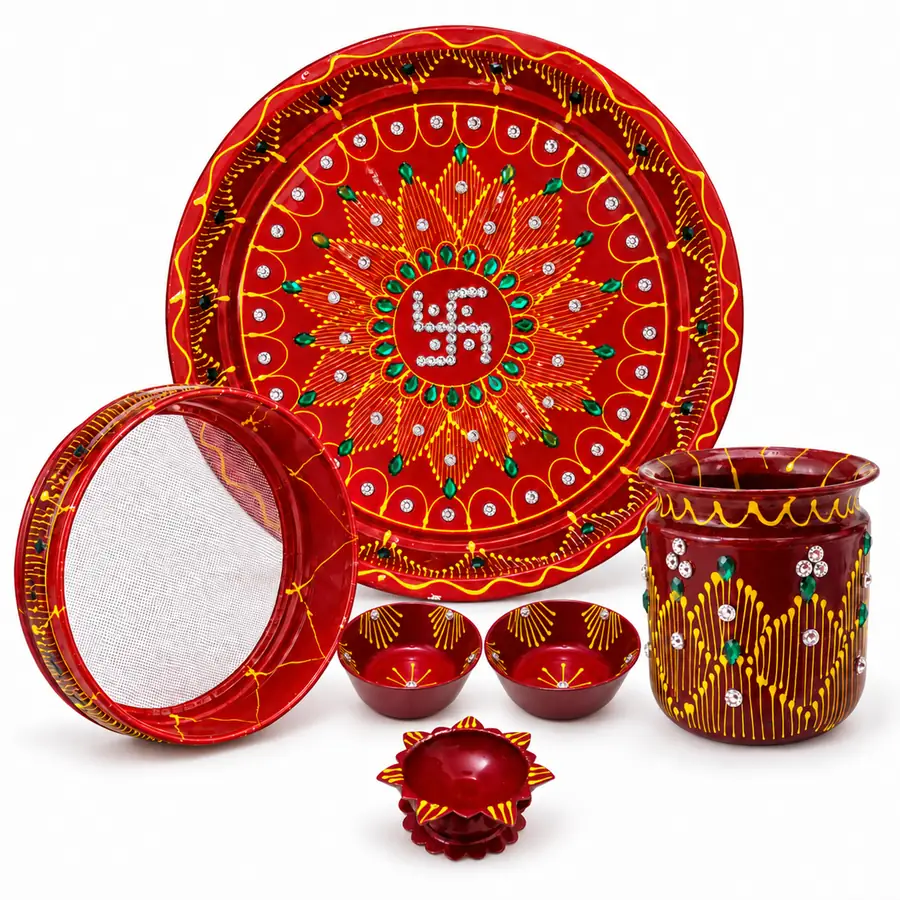
Steel pooja and decor items are part of Bhintika's Metal Decor range. The range also has Karwa Chauth thali sets, which are steel and decorated by hand. Our Karwa Chauth thali set guide explains what each piece is for.
Why choose steel for pooja items?
Choose steel for daily pooja because it is low in cost, simple to clean and keeps its shine without polishing. Other metals have their own place. Here is a fair comparison:
- Steel. Cost: low. Care: wash with soap and dry. Look: bright silver colour that stays the same.
- Brass. Cost: medium to high. Care: tarnishes and needs regular polishing with lemon, tamarind or a brass cleaner. Look: warm golden, very traditional.
- Copper. Cost: medium to high. Care: darkens quickly and needs frequent cleaning. Look: reddish, and traditionally used for water vessels.
- Silver. Cost: high. Care: tarnishes and needs careful polishing and storage. Look: kept by many families for special occasions.
Many homes use a mix: steel for every day, and brass or silver for festivals. If your family custom prefers a certain metal for a certain ritual, follow that.
How do you arrange a small pooja corner in a flat?
Fix a wall-mounted mandir or shelf at chest height and keep only daily items on it. By tradition, idols are not kept at floor level, and a raised shelf also keeps them away from children and from mopping water.
- Height: keep the idols at about chest level if you stand to pray, or at eye level when seated if you sit on the floor.
- Flame safety: keep the diya at least one foot away from wall decor, curtains and paper, and never light it directly under a shelf.
- Storage: keep matchboxes, wicks, agarbatti and extra oil in a closed box or drawer below.
Which wall decor suits a pooja room?
One calm religious design on a side wall suits a pooja room best. Too many pieces make a small space look crowded and take attention away from the mandir.
Bhintika wall decor pieces are MDF with UV-printed designs, so keep them dry and away from the lamp. For direction and height, see our guide on placing Krishna wall art at home.
How do you decorate the pooja room for festivals?
Add a toran, a rangoli and extra diyas, and leave the daily setup as it is. Festival decoration should be easy to put up and easy to remove.
- Toran: hang it on the frame of the pooja space or the room door.
- Rangoli: make a small one in front of the mandir. Ready rangoli colours and combo kits save time on a busy festival morning.
- Diyas: place extra lamps on a steel plate so oil does not spill on the floor.
For rangoli in a small space, our guide to rangoli designs for small homes has layouts that fit flats.
How do you clean and care for steel pooja items?
Wash steel items with mild dish soap and a soft sponge, then dry them at once with a cotton cloth. Drying matters, because water left on steel leaves white spots.
- For oil, ghee or soot, soak the item in warm water for ten minutes before washing.
- Do not use steel wool or a hard scrubber. It leaves scratches.
- Steel pieces that are decorated by hand, such as a Karwa Chauth thali set, are the exception. Wipe them with a soft, dry cloth and do not wash, soak or scrub them.
Frequently asked questions
Which direction is best for a pooja room?
Vastu tradition suggests the north-east corner of the home, with the person facing east or north while praying. In a flat where that is not possible, many families choose any clean and quiet corner.
Can I use steel items for pooja?
Yes. Steel thalis, diyas, bowls and glasses are used for daily pooja in many Indian homes. Some families keep brass, copper or silver for special occasions. Follow your own family custom.
How do I decorate a small pooja corner in a flat?
Use a wall-mounted mandir or a shelf, one steel thali with only the daily items, one wall piece and one warm light. Keep everything else in a closed box or drawer below.
How do I clean steel pooja items?
Wash them with mild dish soap and a soft sponge, rinse and dry at once with a cotton cloth. For oil or ghee stains, soak in warm water for ten minutes first.
Can I keep printed wall decor in the pooja room?
Yes, on a wall away from the flame. Keep it to the side of the diya or well above it, because heat and soot can mark a printed surface.
A good pooja room is clean, calm and easy to keep that way. Start with a light wall, a few steel items you will use daily, one wall piece and warm light, then add a toran and rangoli on festival days. You can see steel pooja and decor items in the Bhintika metal decor collection.