On this page · 11 sections
What does an evil eye door hanging mean?
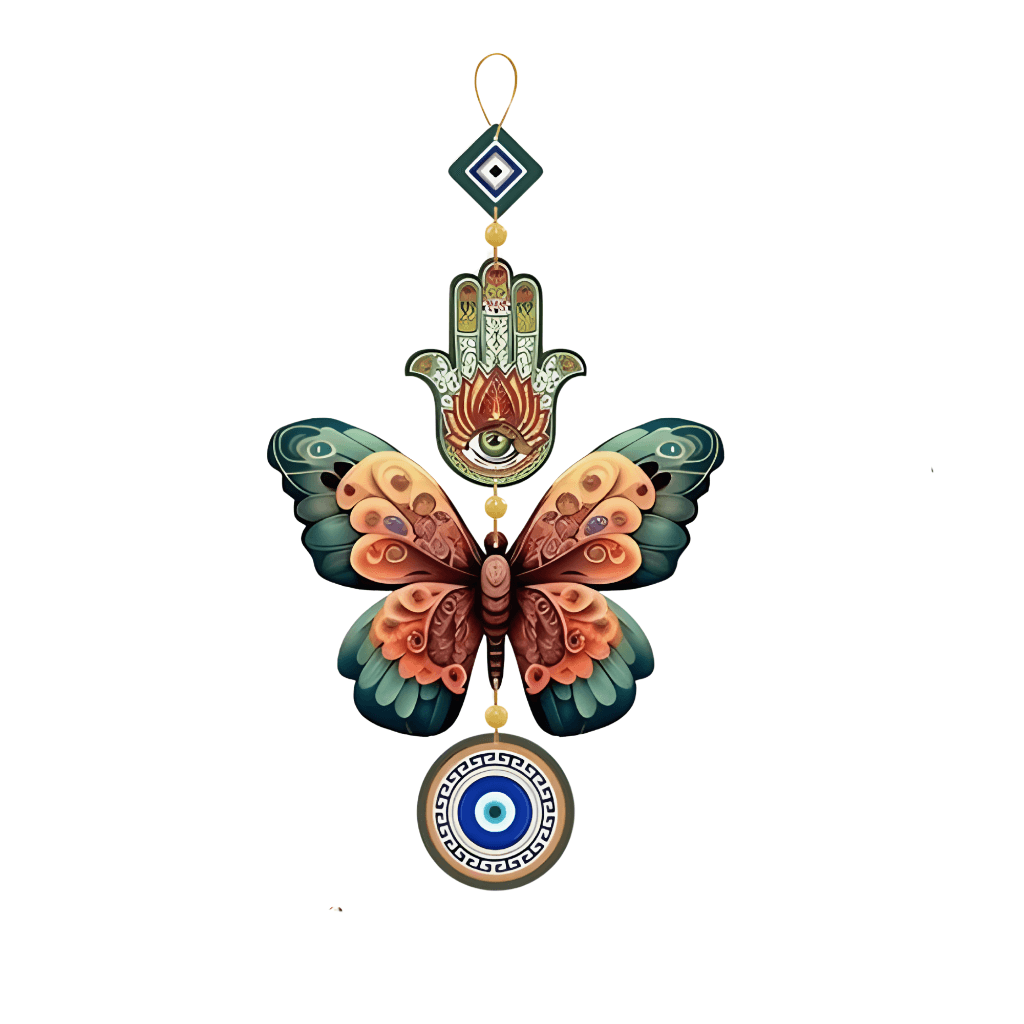
An evil eye hanging for the door is a decorative piece with a blue eye symbol, hung at the entrance of a home. Many people believe it turns away nazar, the harm said to come from a jealous look. It is a tradition and a belief, not a guarantee, and it also works as simple entrance decor.
This guide explains where the symbol comes from, what the hamsa hand means, and how to hang the piece so it looks right and lasts.
What is the evil eye belief?
The evil eye is the belief that a look of envy or too much praise can bring bad luck to a person, a child or a home. In India it is called nazar or buri nazar. The same idea is found in Turkey, Greece, West Asia and many other parts of the world.
Indian homes already have their own ways of dealing with nazar. You may have seen these:
- Nimbu mirchi, a lemon and green chillies on a thread, hung at the door of a home or shop.
- A kala tika, a small black dot, put on a baby.
- A nazar battu, a face or mask placed on a new building.
The blue eye hanging is one more form of the same wish: may this home stay safe from envy.
Why is the evil eye symbol blue?
The symbol is blue because its best-known form is the Turkish nazar bead, a blue glass charm with circles of white, light blue and black that look like an eye. The idea behind it is that the eye on the charm looks back at the envious eye.
What does the hamsa hand mean?
The hamsa is an open palm symbol from West Asia and North Africa that many people see as a sign of protection and blessing. It is often drawn with an eye in the centre of the palm, which is why you see the two symbols together on one hanging.
Where should you hang an evil eye at the door?
Hang it on or beside the main door, at eye level or a little above, where a visitor sees it first. These are the common spots:
- On the outside of the main door, in the centre, if the door is covered from rain.
- On the wall beside the door, on the side where the door handle is.
- Above the door frame, in the centre.
- On the inside wall facing the door, if the outside is exposed to rain or strong sun.
Eye level means the centre of the piece is about 5 feet from the floor. A long hanging with several parts needs clear space below it, so check that it does not touch the door handle or get caught when the door opens. Bhintika keeps its printed door and entrance hangings in the Home Entrances range.
Is there a right direction for an evil eye hanging?
No fixed direction is linked to the evil eye hanging, and most people simply hang it at the main entrance. The blue eye symbol did not come from Vastu tradition, so you will not find a Vastu rule for it.
If your family follows Vastu for the entrance, you can keep both. A toran above the door, a rangoli at the threshold and an evil eye beside the door sit well together. We shared more ideas in our guide to decorating the entrance for Diwali.
How do you hang it step by step?
Fix one hook at the right height and let the piece hang freely. It takes about ten minutes:
- Hold the piece at the door and check the height. The centre should be near eye level, or the top should sit just below the top of the door.
- Open and close the door once to confirm that nothing rubs or gets caught.
- On a wooden door, use a small screw hook. On a wall, drill and use a wall plug with a hook.
- If you cannot drill, use a strong adhesive hook on a clean, dry, smooth surface and press it for the time given on the pack.
- Hang the piece by its loop and step back to check that it hangs straight.
How do you care for a printed evil eye hanging?
Keep it dry and dust it with a soft cloth. Bhintika entrance pieces are made of MDF with UV-printed designs, and MDF can swell if water gets into it.
- Do not hang it where rain or water from mopping can reach it.
- Avoid long hours of direct afternoon sun, which can fade any print over time.
- Wipe with a dry cloth. Do not wash it.
What should you do if the hanging breaks?
Take it down and replace it. Many people believe a cracked or broken evil eye has taken the nazar on itself and has done its work. That is a belief. The practical reason is that a cracked piece can fall when the door is shut hard.
If a piece you ordered from Bhintika arrives damaged, report it within 48 hours with photos. The steps are on the returns page.
Does an evil eye hanging go with other wall decor?
Yes, it goes well with a welcome board, a wall key holder or a religious design near the entrance. Keep one main piece at the door and place other wall decor pieces on the inside wall so the entrance does not look crowded.
Frequently asked questions
Should an evil eye hanging be inside or outside the door?
Both are common. Many people hang it outside so it is seen before a visitor enters. If your door gets rain or strong sun, hang it on the inside wall facing the door instead.
Which direction should an evil eye hanging face?
There is no fixed direction for it. The usual practice is to hang it at the main entrance, facing the person who walks in, whichever way the door faces.
What should I do if my evil eye hanging breaks?
Many people believe a broken evil eye has done its work and replace it with a new one. In practical terms, a cracked piece should be taken down so it does not fall.
Can I gift an evil eye hanging?
Yes. It is a common gift for a new home, a new shop or a new baby, given as a wish for the family's well-being.
Is an evil eye hanging part of Vastu?
The blue eye symbol comes from the Mediterranean and West Asia, not from Vastu tradition. Many Indian families use it along with their own customs such as nimbu mirchi or a toran.
An evil eye hanging is a small piece with a long tradition behind it. Hang it at the main door at eye level, keep it dry, and treat the belief as a good wish for your home. You can see evil eye, hamsa and welcome designs in the Bhintika home entrances collection.